
Driving success in automotive applications: Data management with MongoDB

MongoDB, a widely used NoSQL document-oriented database, offers developers a powerful solution for modern application development. With its flexible data model, scalability, high performance, and comprehensive tooling, MongoDB enables developers to unlock the full potential of their projects. By leveraging MongoDB's JSON-like document storage and robust querying capabilities, developers can efficiently store and retrieve data, making it an ideal choice for contemporary applications. Read the article to learn about data management with MongoDB.
Flexible data model for adaptability
One of the primary advantages of MongoDB's NoSQL model is its flexible data model, which allows developers to adapt swiftly to changing requirements and evolving data structures. Unlike traditional relational databases that rely on predefined schemas, MongoDB's schema-less approach enables developers to store documents in a JSON-like format. This flexibility allows for easy modifications to data structures without the need for expensive and time-consuming schema migrations.Consider an automotive application that needs to store vehicle data. With MongoDB, you can store a vehicle document that captures various attributes and information about a specific car. Here's an example of a vehicle document in MongoDB:[code language="javascript"]{"_id": ObjectId("617482e5e7c927001dd6dbbe"),"make": "Ford","model": "Mustang","year": 2022,"engine": {"type": "V8","displacement": 5.0},"features": ["Bluetooth", "Backup Camera", "Leather Seats"],"owners": [{"name": "John Smith", "purchaseDate": ISODate("2022-01-15T00:00:00Z")},{"name": "Jane Doe","purchaseDate": ISODate("2023-03-10T00:00:00Z")}]}[/code]In the above example, each document represents a vehicle and includes attributes such as make, model, year, engine details, features, and a sub-document for owners with their respective names and purchase dates. This flexibility allows for easy storage and retrieval of diverse vehicle data without the constraints of a fixed schema.
Scalability for growing demands
Another key aspect of MongoDB's NoSQL model is its ability to scale effortlessly to meet the demands of modern automotive applications. MongoDB offers horizontal scalability through its built-in sharding capabilities, allowing data to be distributed across multiple servers or clusters. This ensures that MongoDB can handle the increased load as the volume of vehicle data grows by seamlessly distributing it across the available resources.For instance, imagine an automotive application collecting data from a connected car fleet. As the fleet expands and generates a substantial amount of telemetry data, MongoDB's sharding feature can be employed to distribute the data across multiple shards based on a chosen shard key, such as the vehicle's unique identifier. This allows for parallel data processing across the shards, resulting in improved performance and scalability.[code language="javascript"]// Enable sharding on a collectionsh.enableSharding("automotive_db");// Define the shard key as the vehicle's unique identifiersh.shardCollection("automotive_db.vehicles", { "_id": "hashed" });[/code]In the above example, we enable sharding on the „automotive_db” database and shard the „vehicles” collection using the vehicle’s unique identifier („_id”) as the shard key. This ensures that vehicle data is evenly distributed across multiple shards, allowing for efficient data storage and retrieval as the number of vehicles increases.
Leveraging MongoDB's querying capabilities for automotive data
MongoDB provides a powerful and expressive querying language that allows developers to retrieve and manipulate data easily. MongoDB offers a rich set of query operators and aggregation pipelines to meet your needs, whether you need to find vehicles of a specific make, filter maintenance records by a particular date range, or perform complex aggregations on vehicle data.Let's explore some examples of MongoDB queries in the context of an automotive application:[code language="javascript"]// Find all vehicles of a specific makedb.vehicles.find({ make: "Ford" });// Find vehicles with maintenance records performed by a specific mechanicdb.vehicles.find({ "maintenanceRecords.mechanic": "John Smith" });// Retrieve maintenance records within a specific date rangedb.vehicles.aggregate([{$unwind: "$maintenanceRecords"},{$match: {"maintenanceRecords.date": {$gte: ISODate("2022-01-01T00:00:00Z"),$lt: ISODate("2022-12-31T23:59:59Z")}}}]);[/code]In the above examples, we use the `find` method to query vehicles based on specific criteria such as make or mechanic. We also utilize the `aggregate` method with aggregation stages like `$unwind` and `$match` to retrieve maintenance records within a particular date range. These queries demonstrate the flexibility and power of MongoDB's querying capabilities for handling various scenarios in the automotive domain.
Optimizing data management with MongoDB
Efficient data management is crucial for maximizing the performance and effectiveness of automotive applications. MongoDB provides various features and best practices to optimize data management and enhance overall system efficiency. This section will explore practical tips and techniques for optimizing data management with MongoDB.
Data compression for large result sets
When dealing with queries that return large result sets, enabling data compression can significantly reduce the time required for data transfer and improve overall performance. MongoDB supports data compression at the wire protocol level, allowing for efficient compression and decompression of data during transmission.You can include the `compressors` option with the desired compression algorithm to enable data compression using the MongoDB URI connection string.[code language="javascript"]mongodb+srv://<username>:<password>@<cluster>/<database>?compressors=snappy[/code]In the above example, the `compressors` option is set to `snappy,` indicating that data compression using the Snappy algorithm should be enabled. This configuration ensures that data is compressed before being sent over the network, reducing the amount of data transmitted and improving query response times.The technology-independent nature of MongoDB is exemplified by its ability to configure data compression directly within the URI connection string. Whether you are using the MongoDB Node.js driver, Python driver, or any other programming language, the consistent URI syntax enables seamless utilization of data compression across different MongoDB driver implementations. By employing data compression through the URI connection string, automotive applications can optimize the data transfer, reduce network latency, and achieve faster query execution and improved system performance, regardless of the programming language or driver in use.
Optimizing read preferences
When it comes to optimizing read preferences in MongoDB for automotive applications, it is crucial to choose wisely based on the specific use case and the trade-offs dictated by the CAP (Consistency, Availability, Partition tolerance) theorem. The CAP theorem states that in a distributed system, achieving all three properties simultaneously is impossible.In scenarios where data consistency is of utmost importance, opting for the `primary` read preference is recommended. With the `primary` preference, all reads are served exclusively from the primary replica, ensuring strong consistency guarantees. This is particularly valuable in applications where data integrity and real-time synchronization are critical.However, it's important to recognize that prioritizing strong consistency might come at the cost of availability and partition tolerance. In certain automotive use cases, where read availability and scalability are paramount, it may be acceptable to sacrifice some level of consistency. This is where the `secondaryPreferred` read preference can be advantageous.By configuring `secondaryPreferred,` MongoDB allows reads to be distributed across secondary replicas in addition to the primary replica, enhancing availability and load balancing. Nevertheless, it's essential to be aware that there might be a trade-off in terms of data consistency. The secondary replicas might experience replication delays, resulting in potentially reading slightly stale data.In summary, when optimizing read preferences for automotive applications, it's crucial to consider the implications of the CAP theorem. Select the appropriate read preference based on the specific requirements of your use case, carefully balancing consistency, availability, and partition tolerance. Prioritize strong consistency with the `primary` preference when real-time data synchronization is vital and consider the `secondaryPreferred` preference when reading availability and scalability are paramount, acknowledging the possibility of eventual consistency.
Utilizing appropriate clients for complex queries
While MongoDB Atlas provides a web-based UI with an aggregation pipeline for executing complex queries, it is important to note that there are cases where the web UI may not work on the full data set and can return partial data. This limitation can arise due to factors such as query complexity, data size, or network constraints.To overcome this limitation and ensure accurate and comprehensive query results, it is recommended to utilize appropriate clients such as `mongosh` or desktop clients. These clients offer a more interactive and flexible environment for executing complex queries and provide direct access to MongoDB's features and functionalities.Using `mongosh,` for example, allows you to connect to your MongoDB Atlas cluster and execute sophisticated queries directly from the command-line interface. This approach ensures that you have complete control over the execution of your queries and enables you to work with large data sets without encountering limitations imposed by the web-based UI.Here is an example of using `mongosh` to execute a complex aggregation query:[code language="javascript"]// Execute a complex aggregation queryconst pipeline = [{$match: {make: "Tesla"}},{$group: {_id: "$model",count: { $sum: 1 }}},{$sort: {count: -1}}];db.vehicles.aggregate(pipeline);[/code]Additionally, desktop clients provide a graphical user interface that allows for visualizing query results, exploring data structures, and analyzing query performance. These clients often offer advanced query-building tools, query profiling capabilities, and result visualization options, empowering developers to optimize their queries and gain valuable insights from their automotive data.
Handling large data loads
In automotive applications, dealing with large data loads is common, especially when collecting time-series data from multiple sensors or sources simultaneously. MongoDB provides several features and best practices to handle these scenarios efficiently.
- Bulk Write Operations : MongoDB offers bulk write operations, which allow you to perform multiple insert, update, or delete operations in a single request. This can significantly improve the performance of data ingestion by reducing network round trips and server-side processing overhead. By batching your write operations, you can efficiently handle large data loads and optimize the insertion of time-series data into the collection.
- Indexing Strategies : Efficient indexing is crucial for handling large data loads and enabling fast queries in MongoDB. When designing indexes for your automotive application, consider the specific queries you'll perform, such as retrieving data based on vehicle models, sensor readings, or other relevant fields. Properly chosen indexes can significantly improve query performance and reduce the time required to process large data loads.
- Parallel Processing : In scenarios where you need to handle massive data loads, parallel processing can be beneficial. MongoDB allows you to distribute data ingestion tasks across multiple threads or processes, enabling concurrent data insertion into the collections. By leveraging parallel processing techniques, you can take advantage of the available computing resources and speed up the data ingestion process.
- Connection Pooling : Establishing a connection to the MongoDB server for each data load operation can introduce overhead and impact performance. To mitigate this, MongoDB provides connection pooling, which maintains a pool of open connections to the server. Connection pooling allows efficient reuse of connections, eliminating the need to establish a new connection for every operation. This can significantly improve the performance of large data loads by reducing connection setup overhead.
Conclusion
MongoDB, a leading NoSQL document-oriented database, is providing a versatile data management solution for the automotive industry. Its flexible data model allows developers to adapt swiftly to changing requirements and evolving data structures without the need for expensive schema migrations. With scalable sharding capabilities, MongoDB effortlessly handles the growing demands of modern automotive applications, ensuring efficient data storage and retrieval as the volume of vehicle data increases. Leveraging MongoDB's powerful querying language, developers can easily retrieve and manipulate automotive data with rich query operators and aggregation pipelines. By optimizing data management techniques such as data compression, read preferences, appropriate client usage, and efficient handling of large data loads, MongoDB empowers automotive applications with enhanced performance and scalability.But our exploration doesn't stop here. In the next part of this article, we will delve into MongoDB's time-series and change stream features, uncovering how they further enhance the capabilities of automotive applications. Stay tuned for the second installment, where we will discover even more ways to drive success in automotive applications with MongoDB. Together, we will unlock the full potential of MongoDB's advanced features and continue shaping the future of data management in the automotive industry.

Data powertrain in automotive: Complete end-to-end solution
We power your entire data journey, from signals to solutions
Check related articles
Read our blog and stay informed about the industry's latest trends and solutions.
Predictive transport model and automotive. How can smart cities use data from connected vehicles?
There are many indications that the future lies in technology. Specifically, it belongs to connected and autonomous vehicles(CAVs), which, combined with 5G, AI, and machine learning, will form the backbone of the smart cities of the future. How will data from vehicles revolutionize city life as we've known it so far?
Data is "fuel" for the modern, smart cities
The UN estimates that by 2050, about 68 percent of the global population will live in urban areas. This raises challenges that we are already trying to address as a society.
Technology will significantly support connected, secure, and intelligent vehicle communication using vehicle-to-vehicle (V2V), vehicle-to-infrastructure (V2I), and vehicle-to-everything (V2X) protocols. All of this is intended to promote better management of city transport, fewer delays, and environmental protection.
This is not just empty talk, because in the next few years 75% of all cars will be connected to the internet, generating massive amounts of data. One could even say that data will be a kind of "fuel" for mobility in the modern city . It is worth tapping into this potential. There is much to suggest that cities and municipalities will find that such innovative traffic management, routing, and congestion reduction will translate into better accessibility and increased safety. In this way, many potential crises related to overpopulation and excess of cars in agglomerations will be counteracted.
What can smart cities use connected car data for?
Traffic estimation and prediction systems
Data from connected cars, in conjunction with Internet of Things (IoT) sensor networks, will help forecast traffic volumes. Alerts about traffic congestion and road conditions can also be released based on this.
Parking and signalization management
High-Performance Computing and high-speed transmission platforms with industrial AI /5G/ edge computing technologies help, among other things, to efficiently control traffic lights and identify parking spaces, reducing the vehicle’s circling time in search of a space and fuel being wasted.
Responding to accidents and collisions
Real-time processed data can also be used to save the lives and health of city traffic users. Based on data from connected cars , accident detection systems can determine what action needs to be taken (repair, call an ambulance, block traffic). In addition, GPS coordinates can be sent immediately to emergency services, without delays or telephone miscommunication.
Such solutions are already being used by European warning systems, with the recently launched eCall system being one example. It works in vehicles across the EU and, in the case of a serious accident, will automatically connect to the nearest emergency network, allowing data (e.g. exact location, time of the accident, vehicle registration number, and direction of travel) to be transmitted, and then dial the free 112 emergency number. This enables the emergency services to assess the situation and take appropriate action. In case of eCall failure, a warning is displayed.
Reducing emissions
Less or more sustainable car traffic equals less harmful emissions into the atmosphere. Besides, data-driven simulations enable short- and long-term planning, which is essential for low-carbon strategies.
Improved throughput and reduced travel time
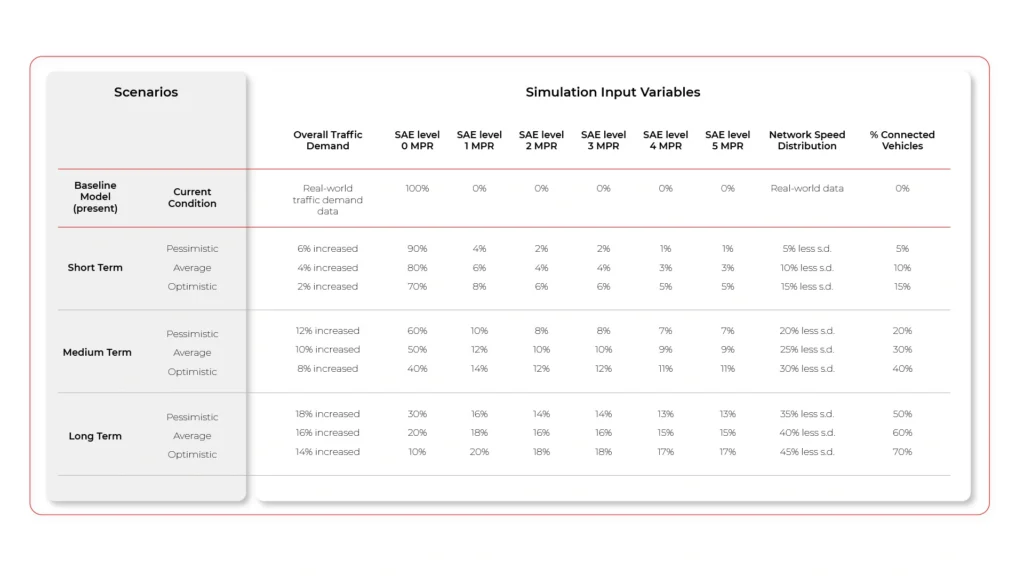
Research clearly shows that connected and automated vehicles add to the comfort of driving. The more such cars on the streets, the better the road capacity on highways.
As this happens, the travel time also decreases. By a specific amount, about 17-20 percent. No congestion means that fewer minutes have to be spent in traffic jams. Of course, this generates savings (less fuel consumption), and also for the environment (lower emissions).
Traffic management (case studies: Hangzhou and Tallinn)
Intelligent traffic management systems (ITS) today benefit from AI . This is apparent in the Chinese city of Hangzhou, which prior to the technology-transportation revolution ranked fifth among the most congested cities in the Middle Kingdom.
Data from connected vehicles there helps to efficiently manage traffic and reduce congestion in the city's most vulnerable districts. They also notify local authorities of traffic violations, such as running red lights. All this without investing in costly municipal infrastructure over a large area. Plus, built-in vehicle telematics requires no maintenance, which also reduces operating costs.
A similar model was compiled in Estonia by Tallinn Transport Authority in conjunction with German software company PTV Group. A continuously updated map illustrates, among other things, the road network and traffic frequency in the city.
Predictive maintenance in public transport
Estimated downtime costs for high-utilization fleets, such as buses and trucks, range from $448 to $760 daily . Just realize the problem of one bus breaking down in a city. All of a sudden, you find that delays affect not just one line, but many. Chaos is created and there are stoppages.
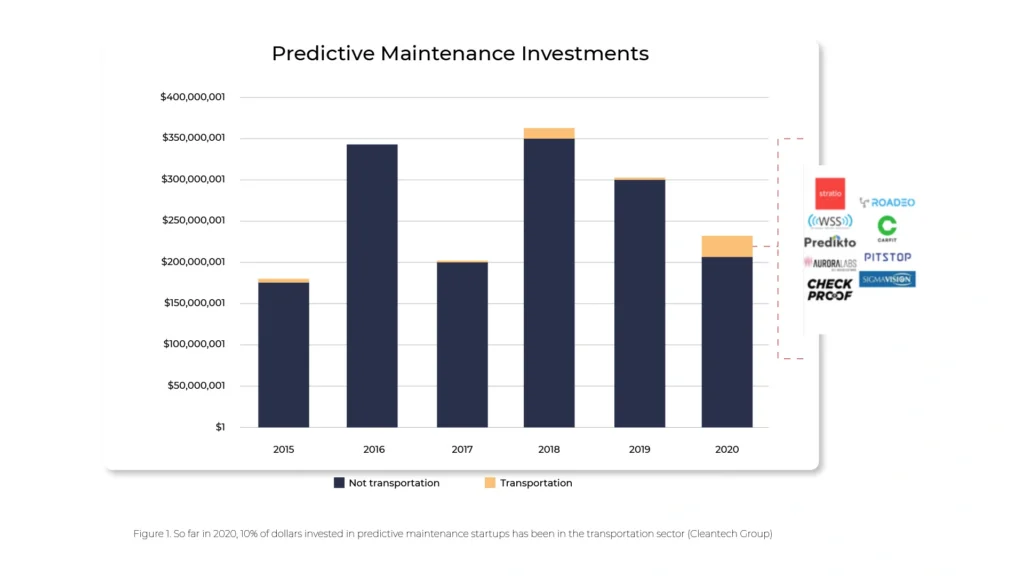
Fortunately, with the trend to equip more and more vehicles with telematics systems, predictive maintenance will be easier to implement. This will significantly increase the usability and safety of networked buses . Meanwhile, maintenance time and costs will drop.
Creating smart cities that are ahead of their time
Connected vehicle data not only make smart cities much smarter, but when leveraged for real-time safety, emergency planning, and reducing congestion, it saves countless lives and enables a better, cleaner urban experience – said Ben Wolkow, CEO of Otonomo.
The digitization of the automotive sector is accelerating the trend of smart and automated city traffic management. A digital transport model can forecast and analyze the city’s mobility needs to improve urban planning.
Interested in our services?
Reach out for tailored solutions and expert guidance.