
AI decisions backed by experience
Strategic guidance across business alignment, data validation, and technical planning - so your AI starts on solid ground.

Business & strategy consulting
Comprehensive AI opportunity assessment: identifying high-value use cases, evaluating technical and organizational feasibility, and defining measurable outcomes for prioritized initiatives.Comprehensive AI opportunity assessment: identifying high-value use cases, evaluating technical and organizational feasibility, and defining measurable outcomes for prioritized initiatives.
Rapid prototyping to validate whether a proposed AI solution works with actual data and constraints. Covers both generative AI and traditional ML approaches.
Translating validated concepts into actionable implementation plans - timelines, team structure, infrastructure needs, compliance considerations.
AI solution consulting
Designing system architecture for AI solutions: model serving, integration layers, security, observability, and compliance.
Evaluating and selecting AI infrastructure: LLM providers, embedding models, vector databases, orchestration frameworks, MLOps tooling - based on project requirements, existing stack, and maintainability.
End-to-end delivery: custom model development, fine-tuning, system integration, performance optimization, and knowledge transfer. Covers generative AI and traditional ML.
How we support your AI journey
From identifying opportunities to upskilling your teams — we cover every step of successful AI adoption.

Strategic adoption
Helping you identify high-impact use cases, align AI initiatives with business goals, and accelerate implementation through proven frameworks and pre-built components.

Risk & compliance
Navigating ethical, legal, and regulatory aspects of AI — from data privacy and bias reduction to explainability and audit readiness.

Tailored solutions
Custom AI models and architectures designed around your industry challenges, data landscape, and operational requirements.

Upskilling & change
Training, documentation, and process transformation to help your teams successfully integrate and maintain AI-driven systems.
Learn how we help our customers tackle their challenges
Explore how we redefine industry standards through innovation.


.jpg)
Ready to scale AI on solid ground?
Reach out for tailored solutions and expert guidance.
Learn more about our AI strategies
Exploring the impact of Generative AI
How to make your enterprise data ready for AI
As AI continues to transform industries, one thing becomes increasingly clear: the success of AI-driven initiatives depends not just on algorithms but on the quality and readiness of the data that fuels them. Without well-prepared data, even the most advanced artificial intelligence endeavors can fall short of their promise. In this guide, we cover the practical steps you need to take to prepare your data for AI.
What's the point of AI-ready data?
The conversation around AI has shifted dramatically in recent years. No longer a distant possibility, AI is now actively changing business landscapes - transforming supply chains through predictive analytics, personalizing customer experiences with advanced recommendation engines, and even assisting in complex fields like financial modeling and healthcare diagnostics.
The focus today is not on whether AI technologies can fulfill its potential but on how organizations can best deploy it to achieve meaningful, scalable business outcomes.
Despite pouring significant resources into AI, businesses are still finding it challenging to fully tap into its economic potential.
For example, according to Gartner , 50% of organizations are actively assessing GenAI's potential, and 33% are in the piloting stage. Meanwhile, only 9% have fully implemented generative AI applications in production, while 8% do not consider them at all.
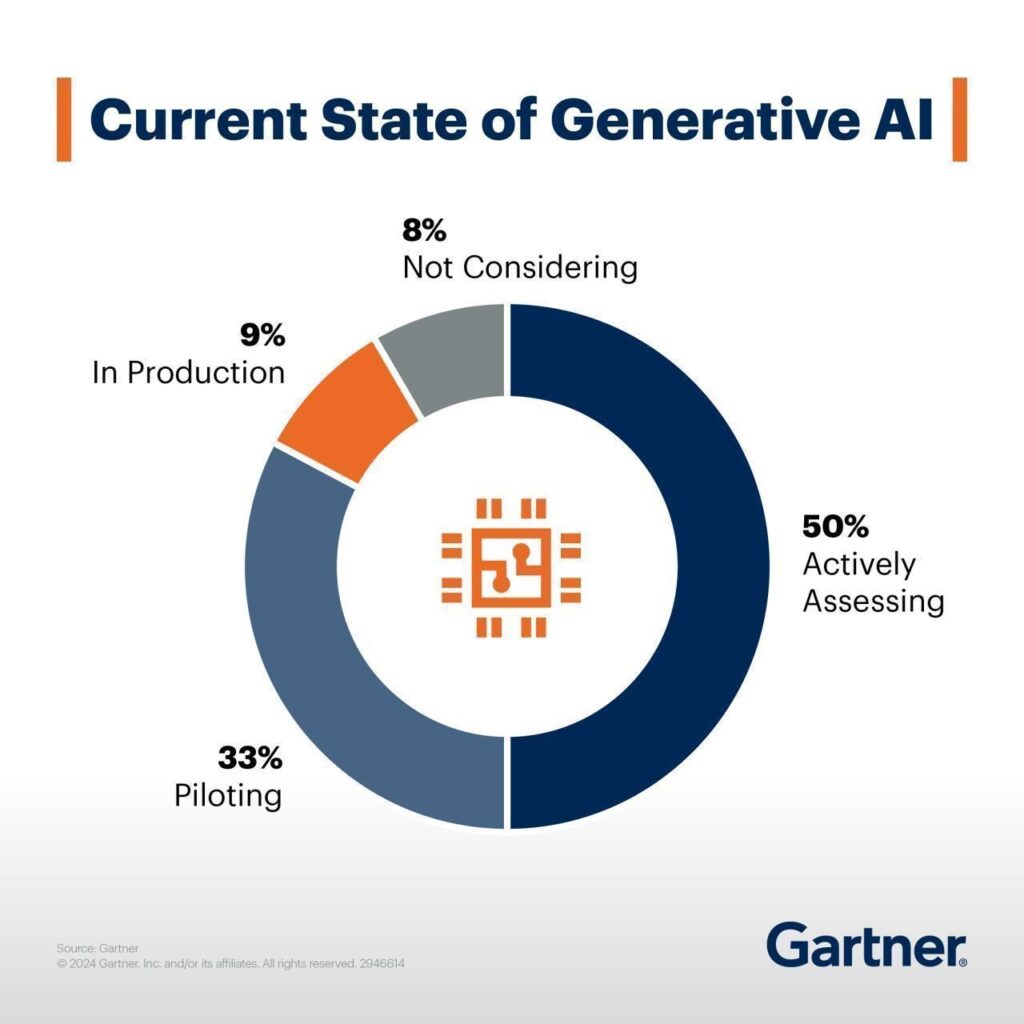
Source: www.gartner.com
The problem often comes down to a key but frequently overlooked factor: the relationship between AI and data. The key issue is the lack of data preparedness . In fact, only 37% of data leaders believe that their organizations have the right data foundation for generative AI, with just 11% agreeing strongly. That means specifically that chief data officers and data leaders need to develop new data strategies and improve data quality to make generative AI work effectively .
What does your business gain by getting your data AI-ready?
When your data is clean, organized, and well-managed , AI can help you make smarter decisions, boost efficiency, and even give you a leg up on the competition .
So, what exactly are the benefits of putting in the effort to prepare your data for AI? Let’s break it down into some real, tangible advantages.
- Clean, organized data allows AI to quickly analyze large amounts of information, helping businesses understand customer preferences, spot market trends, and respond more effectively to changes.
- Getting data AI-ready can save time by automating repetitive tasks and reducing errors.
- When data is properly prepared, AI can offer personalized recommendations and targeted marketing, which can enhance customer satisfaction and build loyalty.
- Companies that prepare their data for AI can move faster, innovate more easily, and adapt better to changes in the market, giving them a clear edge over competitors.
- Proper data preparation ensures businesses can comply with regulations and protect sensitive information.
Importance of data readiness for AI
Unlike traditional algorithms that were bound by predefined rules, modern AI systems learn and adapt dynamically when they have access to data that is both diverse and high-quality.
For many businesses, the challenge is that their data is often trapped in outdated legacy systems that are not built to handle the volume, variety, or velocity required for effective AI. To enable AI to innovate, companies need to first free their data from old silos and establish a proper data infrastructure.
Key considerations for data modernization
- Bring together data from different sources to create a complete picture, which is essential for AI systems to make useful interpretations.
- Build a flexible data infrastructure that can handle increasing amounts of data and adapt to changing AI needs.
- Set up systems to process data in real-time or near-real-time for applications that need immediate insights.
- Consider ethical and privacy issues and comply with regulations like GDPR or CCPA.
- Continuously monitor data quality and AI performance to maintain accuracy and usefulness.
- Employ data augmentation techniques to increase the variety and volume of data for training AI models when needed.
- Create feedback mechanisms to improve data quality and AI performance based on real-world results.
Creating data strategy for AI
Many organizations fall into the trap of trying to apply AI across every function, often ending up with wasted resources and disappointing results. A smarter approach is to start with a focused data strategy.
Think about where AI can truly make a difference – would it be automating repetitive scheduling tasks, personalizing customer experiences with predictive analytics , or using generative AI for content creation and market analysis?
Pinpoint high-impact areas to gain business value without spreading your efforts too thin.
Building a solid AI strategy is also about creating a strong data foundation that brings all factors together. This means making sure your data is not only reliable, secure, and well-organized but also set up to support specific AI use cases effectively.
It also involves creating an environment that encourages experimentation and learning. This way, your organization can continuously adapt, refine its approach, and get the most out of AI over time.
Building an AI-optimized data infrastructure
After establishing an AI strategy, the next step is building a data platform that works like the organization’s central nervous system, connecting all data sources into a unified, dynamic ecosystem.
Why do you need it? Because traditional data architectures were built for simpler times and can't handle the sheer diversity and volume of today's data - everything from structured databases to unstructured content like videos, audio, and user-generated data.
An AI-ready data platform needs to accommodate all these different data types while ensuring quick and efficient access so that AI models can work with the most relevant, up-to-date information.
Your data platform needs to show "data lineage" - essentially, a clear map of how data moves through your system. This includes where the data originates, how it’s transformed over time, and how it gets used in the end. Understanding this flow maintains trust in the data, which AI models rely on to make accurate decisions.
At the same time, the platform should support "data liquidity." This is about breaking data into smaller, manageable pieces that can easily flow between different systems and formats. AI models need this kind of flexibility to get access to the right information when they need it.
Adding active metadata management to this mix provides context, making data easier to interpret and use. When all these components are in place, they turn raw data into a valuable, AI-ready asset.
Setting up data governance and management rules
Think of data governance as defining the rules of the game: how data should be collected, stored, and accessed across your organization. This includes setting up clear policies on data ownership, access controls, and regulatory compliance to protect sensitive information and ensure your data is ethical, unbiased, and trustworthy.
Data management , on the other hand, is all about putting these rules into action. It involves integrating data from different sources, cleaning it up, and storing it securely , all while making sure that high-quality data is always available for your AI projects. Effective data management also means balancing security with access so your team can quickly get to the data they need without compromising privacy or compliance. Together, strong governance and management practices create a fluid, efficient data environment.
The crux of the matter - preparing your data
Remember that data readiness goes beyond just accumulating volume. The key is to make sure that data remains accurate and aligned with the specific AI objectives. Raw data, coming straight from its source, is often filled with errors, inconsistencies, and irrelevant information that can mislead AI models or distort results.
When you handle data with care, you can be confident that your AI systems will deliver tangible business value across the organization.
Focus on the quality of your training data . It needs to be accurate, consistent, and up-to-date. If there are gaps or errors, your AI models will deliver unreliable results. Address these issues by using data cleaning techniques , like filling in missing values (imputation), removing irrelevant information (noise reduction), and ensuring that all entries follow the same format.
Create a solid data foundation that ensures all assets are ready for AI applications. Rising data volumes (think of transaction histories, service requests, or customer records) can quickly overwhelm AI systems if not properly organized. Therefore, make sure your data is well- categorized, labeled, and stored in a format that’s easy for AI to access and analyze.
Also, make a habit of regularly reviewing your data to keep it accurate, relevant, and ready for use.
Preparing data for generative AI
For generative AI, data preparation is even more specialized, as these models require high-quality datasets that are free of errors, diverse and balanced to prevent biased or misleading outputs.
Your dataset should represent a wide range of scenarios , giving the model a thorough base to learn from, which requires incorporating data from multiple sources, demographics, and contexts.
Also, consider that generative AI models often require specific preprocessing steps depending on the type of data and the model architecture. For example, text data might need tokenization, while image data might require normalization or augmentation.
The big picture - get your organization AI-ready too
All your efforts with data and AI tools won't matter much if your organization isn’t prepared to embrace these changes. The key is building a team that combines tech talent - like data scientists and machine learning experts - with people who understand your business deeply. This means you might need to train and upskill your existing employees to fill gaps.
But there is more – you also need to think about creating a culture that welcomes transformation . Encourage experimentation, cross-team collaboration, and continuous learning. Make sure everyone understands both the potential and the risks of AI. When your team feels confident and aligned with your AI strategy, that’s when you’ll see the real impact of all your hard work.
By focusing on these steps, you create a solid foundation that helps AI deliver real results, whether that's through better decision-making, improving customer experiences, or staying competitive in a fast-changing market. Preparing your data may take some effort upfront, but it will make a big difference in how well your AI projects perform in the long run.
The key to ROAI: Why high-quality data is the real engine of AI success
Data might not literally be “the new oil,” but it’s hard to ignore its growing impact on companies' operations. By some estimates, the world will generate over 180 zettabytes of data by the end of 2025 . Yet, many organizations still struggle to turn that massive volume into meaningful insights for their AI projects.
According to IBM, poor data quality already costs the US economy alone $3.1 trillion per year - a staggering figure that underscores just how critical proper governance is for any initiative, AI included.
On the flip side, well-prepared data can dramatically boost the accuracy of AI models, shorten the time it takes to get results and reduce compliance risks. That’s why the high quality of information is increasingly recognized as the biggest factor in an AI project’s success or failure and a key to ROAI.
In this article, we’ll explore why good data practices are so vital for AI performance, what common pitfalls often derail organizations, and how usage transparency can earn customer trust while delivering a real return on AI investment.
Why data quality dictates AI outcomes
An AI model’s accuracy and reliability depend on the breadth, depth, and cleanliness of the data it’s trained on. If critical information is missing, duplicated, or riddled with errors, the model won’t deliver meaningful results, no matter how advanced it is. It’s increasingly being recognized that poor quality leads to inaccurate predictions, inefficiencies, and lost opportunities.
For example, when records contain missing values or inconsistencies, AI models generate results that don’t reflect reality. This affects everything from customer recommendations to fraud detection, making AI unreliable in real-world applications. Additionally, poor documentation makes it harder to trace data sources, increasing compliance risks and reducing trust in AI-driven decisions.
The growing awareness has made data governance a top priority across industries as businesses recognize its direct impact on AI performance and long-term value.
Metrics for success: Tracking the impact of quality data on AI
Even with the right data preparation processes in place, organizations benefit most when they track clear metrics that tie data quality to AI performance. Here are key indicators to consider:
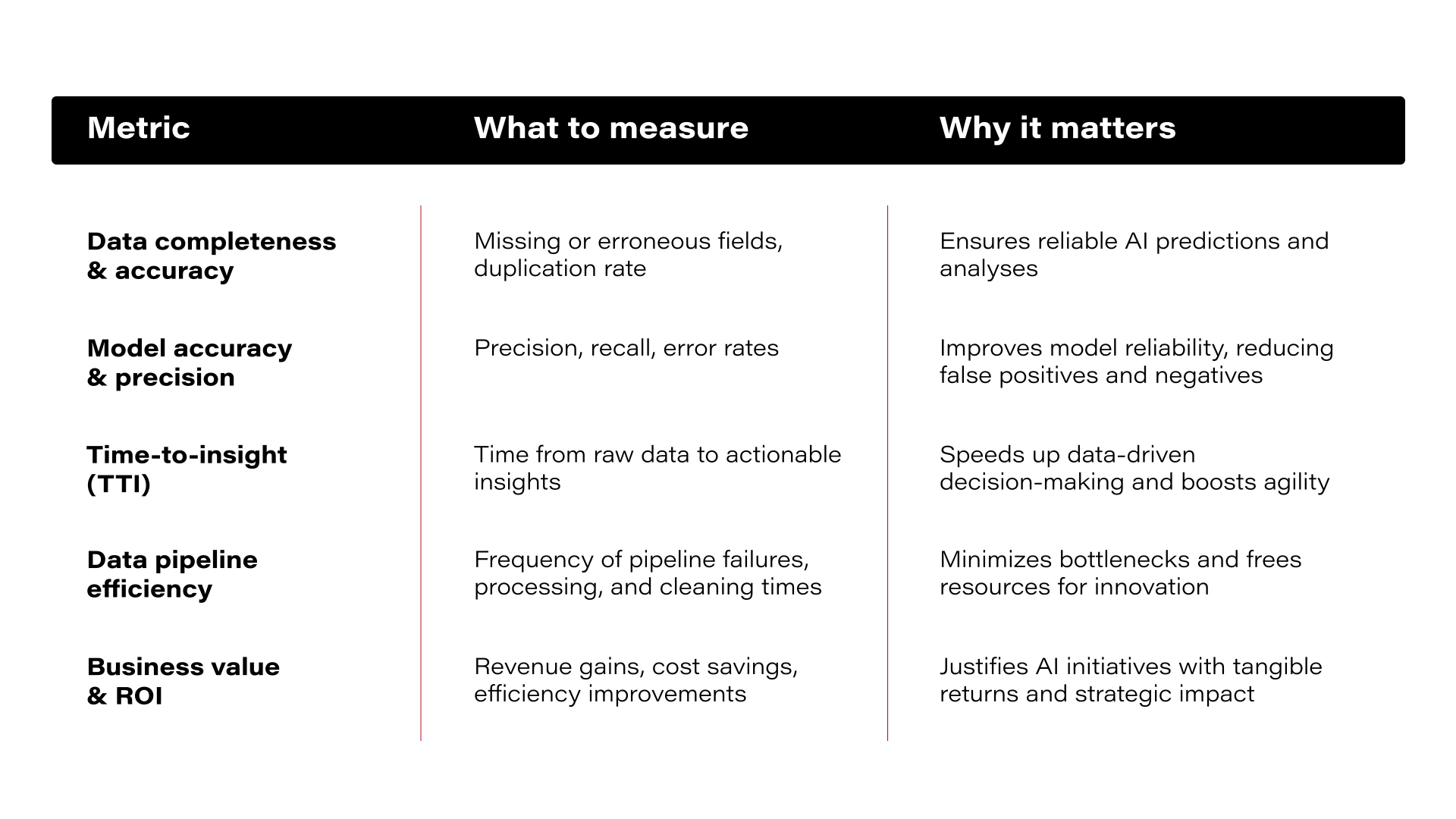
Monitoring these metrics lets organizations gain visibility into how effectively their information supports AI outcomes. The bottom line is that quality data should lead to measurable gains in operational efficiency, predictive accuracy, and overall business value. In other words - it's the key to ROAI.
However, even with strong data quality controls, many companies struggle with deeper structural issues that impact AI effectiveness.
AI works best with well-prepared data infrastructures
Even the cleanest sets won’t produce value if data infrastructure issues slow down AI workflows. Without a strong data foundation, teams spend more time fixing errors than training AI models.
Let's first talk about the people - they too are, after all, key to ROAI.
The right talent makes all the difference
Fixing data challenges is about tools as much as it is about people.
- Data engineers make sure AI models work with structured, reliable datasets.
- Data scientists refine data quality, improve model accuracy, and reduce bias.
- AI ethicists help organizations build responsible, fair AI systems.
Companies that invest in data expertise can prevent costly mistakes and instead focus on increasing ROAI.
However, even with the right people, AI development still faces a major roadblock: disorganized, unstructured data.
Disorganized data slows AI development
Businesses generate massive amounts of data from IoT devices, customer interactions, and internal systems. Without proper classification and structure, valuable information gets buried in raw, unprocessed formats. This forces data teams to spend more time cleaning and organizing instead of implementing AI in their operations.
- How to improve it: Standardized pipelines automatically format, sort, and clean data before it reaches AI systems. A well-maintained data catalog makes information easier to locate and use, speeding up development.
Older systems struggle with AI workloads
Many legacy systems were not built to process the volume and complexity of modern AI workloads. Slow query speeds, storage limitations, and a lack of integration with AI tools create bottlenecks. These issues make it harder to scale AI projects and get insights when they are needed.
- How to improve it: Upgrading to scalable cloud storage and high-performance computing helps AI process data faster. Moreover, integrating AI-friendly databases improves retrieval speeds and ensures models have access to structured, high-quality inputs.
Beyond upgrading to cloud solutions, businesses are exploring new ways to process and use information.
- Edge computing moves data processing closer to where it’s generated to reduce the need to send large volumes of information to centralized systems. This is critical in IoT applications, real-time analytics, and AI models that require fast decision-making.
- Federated learning allows AI models to train across decentralized datasets without sharing raw data between locations. This improves security and is particularly valuable in regulated industries like healthcare and finance, where data privacy is a priority.
Siloed data limits AI accuracy
Even when companies maintain high-quality data, access restrictions, and fragmented storage prevent teams from using it effectively. AI models trained on incomplete datasets miss essential context, which in turn leads to biased or inaccurate predictions. When different departments store data in separate formats or systems, AI cannot generate a full picture of the business.
- How to improve it: Breaking down data silos allows AI to learn from complete datasets. Role-based access controls provide teams with the right level of data availability without compromising security or compliance.
Fixing fragmented data systems and modernizing infrastructure is key to ROAI, but technical improvements alone aren’t enough. Trust, compliance, and transparency play just as critical a role in making AI both effective and sustainable.
Transparency, privacy, and security: The trust trifecta
AI relies on responsible data handling. Transparency builds trust and improves outcomes, while privacy and security keep organizations compliant and protect both customers and businesses from unnecessary risks. When these three elements align, people are more willing to share data, AI models become more effective, and companies gain an edge.
Why transparency matters
82% of consumers report being "highly concerned" about how companies collect and use their data, with 57% worrying about data being used beyond its intended purpose. When customers understand what information is collected and why, they’re more comfortable sharing it. This leads to richer datasets, more accurate AI models, and smarter decisions. Internally, transparency helps teams collaborate more effectively by clarifying data sources and reducing duplication.
Privacy and security from the start - a key to ROAI
While transparency is about openness, privacy and security focus on protecting data. Main practices include:
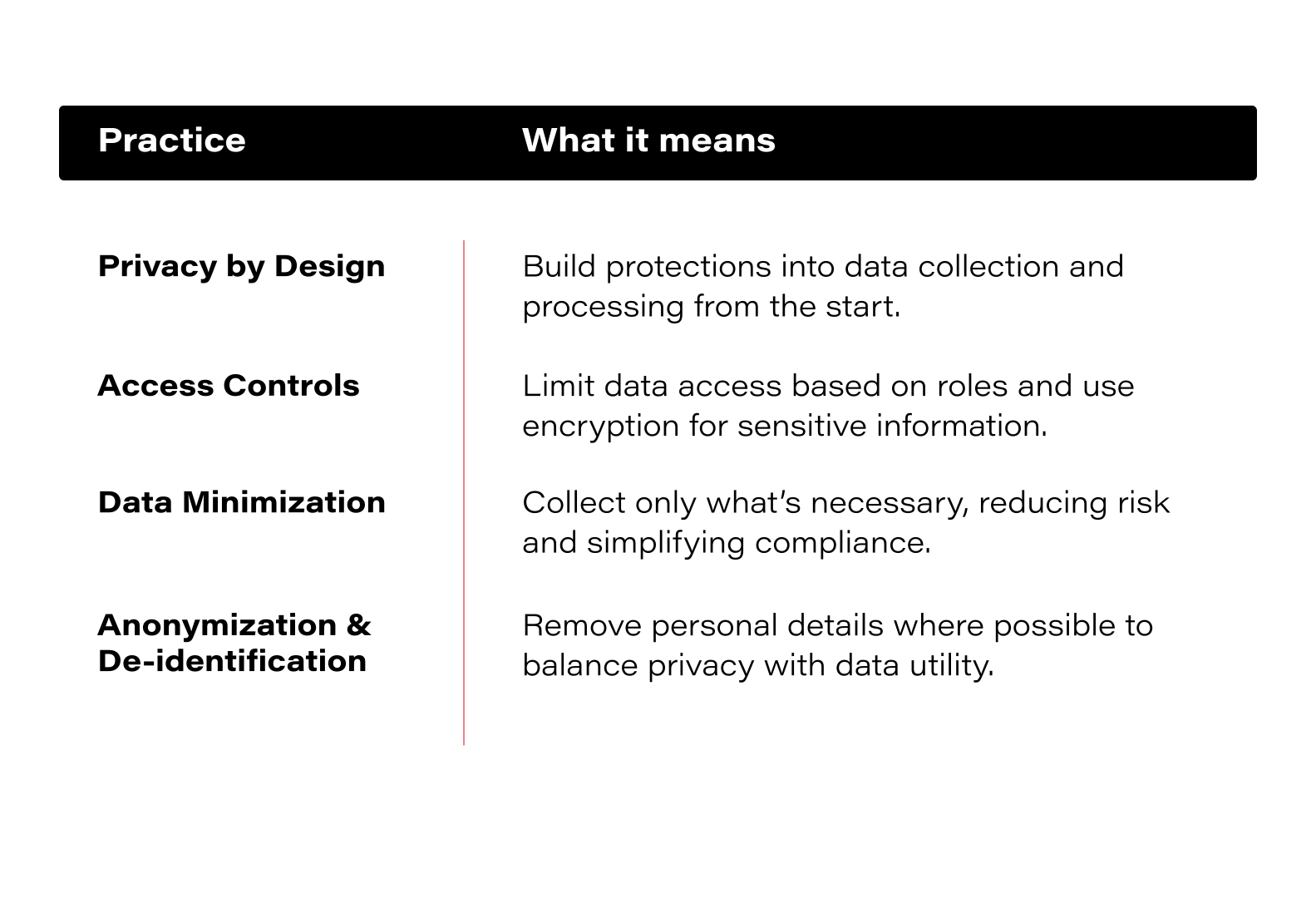
Compliance as a competitive advantage
Clear records and responsible data practices reduce legal risks and allow teams to focus on innovation instead of compliance issues. Customers who feel their privacy is respected are more willing to engage, while strong data practices can also attract partners, investors, and new business opportunities.
Use data as the strategic foundation for AI
The real value of AI comes from turning data into real insights and innovation - but none of that happens without a solid data foundation.
Outdated systems, fragmented records, and governance gaps hold back AI performance. Fixing these issues ensures AI models are faster, smarter, and more reliable.
Are your AI models struggling with data bottlenecks?
Do you need to modernize your data infrastructure to support AI at scale?
We specialize in building, integrating, and optimizing data architectures for AI-driven businesses.
Let’s discuss what’s holding your AI back and how to fix it.
Contact us to explore solutions tailored to your needs.
How to manage operational challenges to sustain and maximize ROAI
Companies invest in artificial intelligence expecting better efficiency, smarter decisions, and stronger business outcomes. But too often, AI projects stall or fail to make a real impact. The technology works, but the real challenge is getting it to fit within business operations to maximize ROAI.
People resist change, legacy systems slow adoption down, compliance rules create obstacles, and costs pile up. More than 80% of AI projects never make it into production, double the failure rate of traditional IT projects. The gap between ambition and actual results is clear, but it doesn’t have to stay that way.
This article breaks down the biggest challenges holding companies back and offers practical ways to move past them. The right approach makes all the difference in turning AI from an experiment into a lasting source of business value.
Overcoming resistance to change
AI brings new ways of working, but not everyone feels comfortable with the shift. Employees often worry about job security, with 75% of U.S. workers concerned that AI could eliminate certain roles and 65% feeling uneasy about how it might affect their own positions.
Uncertainty grows when employees don’t understand how artificial intelligence fits into their work. People are more likely to embrace change when they see how technology supports them rather than disrupts what they do.
Open conversations and hands-on experience with new tools help break down fear. When companies provide training that focuses on practical benefits, employees gain confidence in using the technology instead of feeling like it’s something happening to them.
Leaders play a big role in setting the tone. Encouraging teams to test AI in small ways, celebrating early wins, and keeping communication clear makes tech feel like an opportunity rather than a threat. When employees see real improvements in their work, resistance turns into curiosity, and curiosity leads to stronger adoption.
But even when employees are ready, another challenge emerges - making it work with the technology already in place. That step is crucial if you want to maximize ROAI.
Integrating AI with legacy systems and managing costs
Many companies rely on applications built long before AI became essential to business operations. These legacy systems often store data in outdated formats, operate on rigid architectures, and struggle to handle the computing demands that technology requires. Adding new tools to these environments without careful planning leads to inefficiencies, increased costs, and stalled projects.
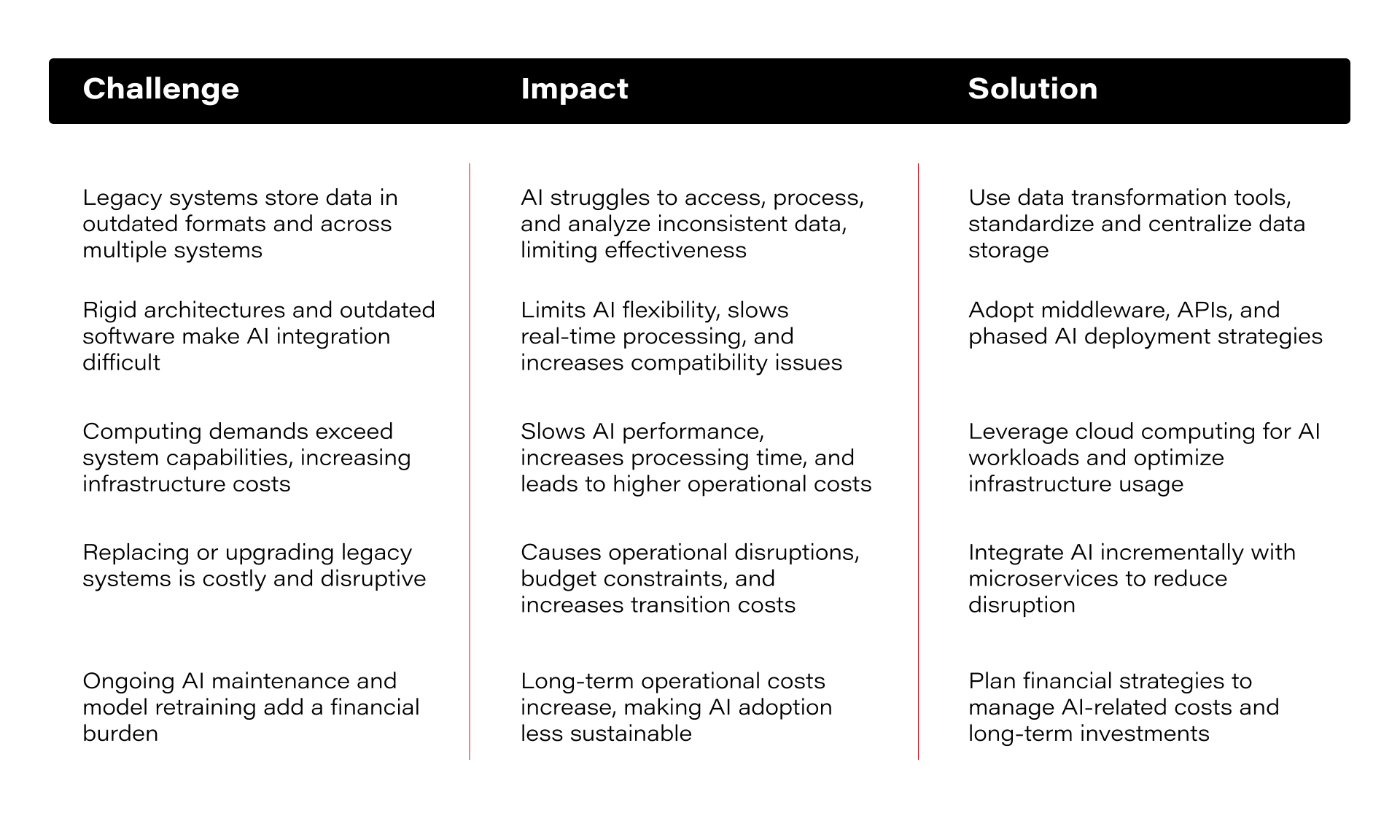
Technical challenges are only one piece of the puzzle, though. Even after AI is up and running, costs can add up fast. Businesses that don’t plan for ongoing expenses risk turning it into a financial burden instead of a long-term asset.
Upfront investments are just the beginning. As AI scales, companies face:
- Rising cloud and computing expenses – Models require significant processing power. Cloud services offer scalability, but expenses climb quickly as usage grows.
- Continuous updates and maintenance – AI systems need regular tuning and retraining to stay accurate. Many businesses underestimate how much this adds to long-term costs.
- Vendor lock-in risks – Relying too much on a single provider can lead to higher fees down the road. Limited flexibility makes it harder to switch to more affordable options.
Without a clear financial strategy, technology can become more expensive than expected. The right approach keeps costs under control while maximizing business value.
How to manage costs to maximize ROAI
- A clear breakdown of costs, from infrastructure to ongoing maintenance, helps businesses avoid unexpected expenses. Companies can make smarter investment decisions that lead to measurable returns when they understand both short-term and long-term costs.
- A mix of on-premise and cloud resources helps balance performance and cost. Sensitive data and frequent AI workloads can remain on-premise for security reasons, while cloud services provide flexibility and handle peak demand without major infrastructure upgrades.
- Open-source tools offer advanced capabilities without the high price tags of proprietary platforms. These solutions are widely supported and customizable, which helps cut software costs and reduces reliance on a single vendor.
- Some AI projects bring more value than others. Companies that focus on high-impact areas like process automation, predictive maintenance, or data-driven decision-making see more substantial returns. Prioritizing these helps you maximize ROAI.
AI delivers the best results when businesses plan for financial risks. Managing costs effectively allows companies to scale AI without stretching budgets too thin. But costs are only one part of the challenge - AI adoption also comes with regulatory and ethical responsibilities that businesses must address to maintain trust and compliance.
Staying ahead of AI regulations and ethical risks
Laws around AI are tightening, and companies that don’t adapt could face legal penalties or damage to their reputation.
AI regulations vary by region. The EU’s AI Act introduces strict rules, especially for high-risk applications, while the U.S. takes a more flexible approach that leaves room for industry-led standards. Countries like China are pushing for tighter controls, particularly around AI-generated content. Businesses that operate globally must navigate this mix of regulations and make sure they’re compliant in every market.
Beyond regulations, ethical concerns are just as pressing. AI models can reinforce biases, misuse personal data, or lack transparency in decision-making. Without the proper safeguards, technology can lead to discrimination, privacy violations, or decisions that users don’t understand. Customers and regulators expect it to be explainable and fair.
How to stay compliant and ethical without slowing innovation
- Keep up with AI regulations – Compliance isn’t a one-time task. Businesses need to monitor AI and data-related laws in key markets and adjust policies accordingly. Regular audits help ensure AI systems follow evolving legal standards.
- Make decisions transparent – AI models shouldn’t feel like a black box. Clear documentation, model explainability tools, and decision-tracking give businesses and users confidence in outcomes.
- Address bias and fairness – These models are only as far as the data they’re trained on. Regular bias testing, diverse training datasets, and fairness audits reduce the risk of unintended discrimination.
- Protect user privacy – Systems handle vast amounts of sensitive data. Strong encryption, anonymization techniques, and transparent data usage policies help prevent breaches and maintain user trust.
Maximize ROAI with Grape Up
Grape Up helps companies make AI a natural part of their business. With experience in AI development and system integration, the team works closely with organizations to bring tech into real operations without unnecessary costs or disruptions.
A strong background in software engineering and data infrastructure allows us to support businesses in adopting artificial intelligence in a way that fits their existing technology. We focus on practical, effective implementation when working with cloud environments or on-premises systems.
As technological advancements also come with responsibilities, we help companies stay on top of regulatory requirements and ethical considerations.
How is your company approaching AI adoption?