

Industrial vehicles are revenue platforms
Industrial OEMs collect thousands of operational signals per vehicle per hour. Most monetize hardware. The next competitive advantage comes from monetizing the intelligence those signals carry.

The monetization gap
Infrastructure without strategy
Connectivity has matured across industrial fleets. The data infrastructure is largely in place - telemetry systems, fleet platforms, data lakes. Yet most digital initiatives stop at operational visibility.
Signals without a system
Data density is no longer the problem. What's missing is a structured approach to turning that data into commercial offerings - the billing logic, access control, packaging, and delivery channels that make monetization repeatable and scalable.
Data without revenue
OEMs use data for service optimization and downtime reduction, but rarely package it into subscription tiers, premium analytics, usage-based pricing, or partner API products. The signals are there - the commercial layer around them is not.
We design and build your industrial monetization engine
Data monetization is not a single feature - it's a system. We design and build the end-to-end architecture that turns operational signals into recurring digital revenue.
1
Signal
Device data ingestion from forklifts, yard tractors, port equipment, municipal fleets, and AGVs.
2
Platform
Unified, governed data foundations — secure, scalable, and multi-tenant.
3
Intelligence
Analytics and predictive models packaged into digital services.
4
Monetization
Subscription logic, billing models, usage tracking, and partner access control.
5
Revenue
Customer-facing services that generate recurring income beyond hardware sales.
We design and build your industrial monetization engine
Data monetization is not a single feature - it's a system. We design and build the end-to-end architecture that turns operational signals into recurring digital revenue.
Signal
Device data ingestion from forklifts, yard tractors, port equipment, municipal fleets, and AGVs.
Platform
Unified, governed data foundations — secure, scalable, and multi-tenant.
Intelligence
Analytics and predictive models packaged into digital services.
Monetization
Subscription logic, billing models, usage tracking, and partner access control.
Revenue
Customer-facing services that generate recurring income beyond hardware sales.





From signals to revenue products
Forklifts and warehouse equipment
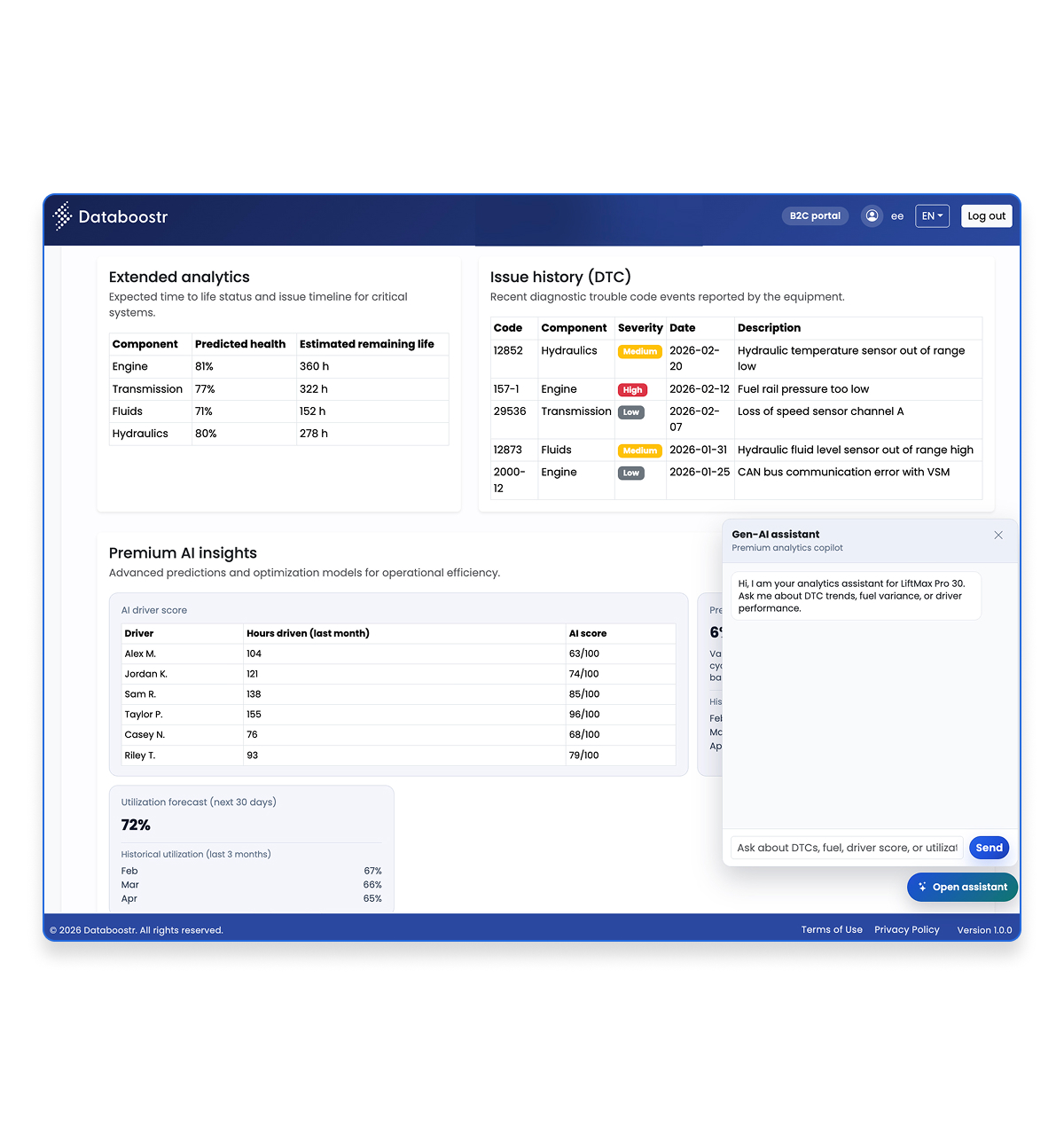
- Utilization benchmarking subscriptions
- Predictive maintenance service tiers
- Energy optimization analytics
- Safety and compliance intelligence
- Cost-per-move dashboards

Yard & 3PL Logistics
- Yard congestion intelligence services
- Dock throughput optimization
- Electric fleet performance analytics
- Usage-based visibility models

Port & Terminal Equipment
- Container movement intelligence
- Equipment uptime services
- Throughput optimization dashboards
- Emissions and energy reporting

Municipal & Utility Fleets
- Route optimization subscriptions
- Compliance and ESG reporting platforms
- Utilization-based billing models

Campus & Small Utility Vehicles
- Location tracking
- Maintenance planning
- Electric fleet performance analytics
- Safety/driver behavior monitoring
Dealership Pulse
AI-based system helping dealership with customer contact using real-time vehicle data
Dealership Pulse analyzes DTC codes information from Connected Vehicle dataset, associates them with repair history and provides context for dealership outreach to their customers:
- Contact timespan suggestion tailored to the specificcustomer situation
- DTC categorization and segmentation to highlight important and severe issues
- Incident filtering based on categories to avoid contacting customer for unimportant DTCs
- Suggestion of most-probable parts to be replaced based on detected incident.
Lorem ipsum
Lorem ipsum

Infrastructure without strategy
Connectivity has matured across industrial fleets. The data infrastructure is largely in place - telemetry systems, fleet platforms, data lakes. Yet most digital initiatives stop at operational visibility.
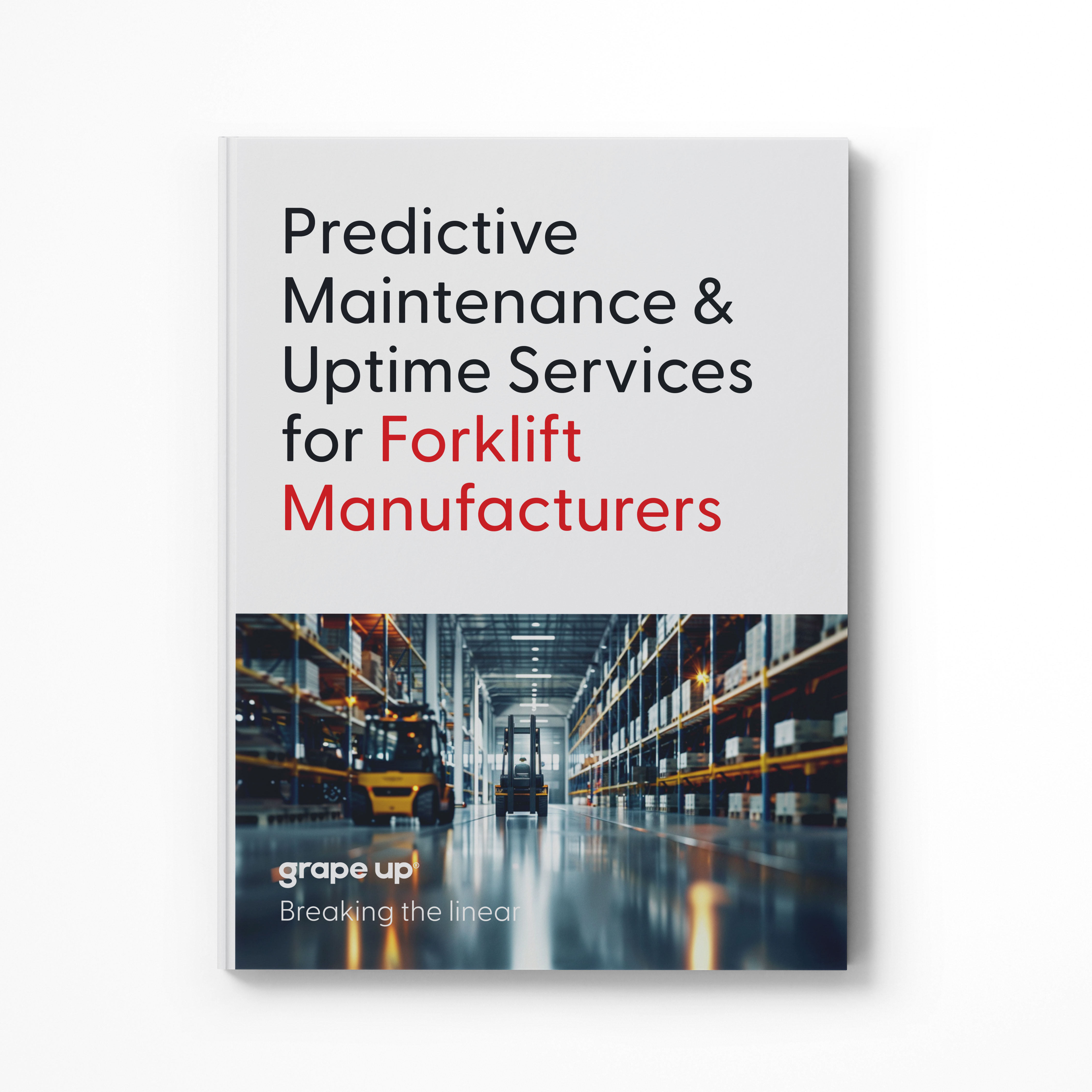
A forklift is no longer a product. It's a subscription waiting to happen.
Manufacturers who scale connected services first won't just improve their margins — they'll redefine what value means in the material handling industry. See exactly how it's done, step by step.
Designed for OEM reality
Built for complexity
We operate in environments where multiple device generations, dealer ecosystems, regional subsidiaries, long product lifecycles, and regulated data coexist. Our teams know how to navigate that complexity and deliver within it.
End-to-end delivery
From device signal to revenue model, from architecture to subscription billing. We embed with OEM teams, align architecture with business goals, and ship production-grade systems.
Enterprise discipline, startup pace
Faster than large consultancies. More coherent than fragmented vendors. With enterprise-grade discipline in security, governance, and scale.





Your vehicles generate intelligence. Let them generate revenue.
Talk to us about turning operational data into structured, scalable digital revenue.
Breaking Points Hub
Find our expert commentary, research, and strategic perspectives on breaking the linear.


FAQ
IoT Data Monetization for Industrial OEMs
IoT data monetization for industrial OEMs is the practice of converting operational telemetry - signals from forklifts, yard tractors, port equipment, or municipal fleets - into structured commercial products. Instead of using sensor data purely for internal diagnostics, manufacturers package it into subscription tiers, premium analytics services, usage-based billing models, or partner APIs that generate recurring digital revenue alongside hardware sales.
IoT data monetization for industrial OEMs is the practice of converting operational telemetry - signals from forklifts, yard tractors, port equipment, or municipal fleets - into structured commercial products. Instead of using sensor data purely for internal diagnostics, manufacturers package it into subscription tiers, premium analytics services, usage-based billing models, or partner APIs that generate recurring digital revenue alongside hardware sales.