
Case study
When a data lake became a data engine

The value of a data lake isn't measured by how much data you store - it's measured by how quickly teams can transform that data into business value without external dependencies.
Starting point
DBS Bank operates digital banking services across multiple Southeast Asian markets. Each region runs on different regulatory requirements and legacy infrastructure, creating data fragmentation across platforms. The bank had invested in a massive data lake storing customer insights, transaction patterns, and operational intelligence - but there was no straightforward way to transform, filter, or operationalize that information for business use.
The data existed, but teams couldn't access it efficiently. Data scientists and product teams submitted requests to centralized engineering groups, waiting weeks for custom pipelines to be built. Every new digital service required manual data integration work. Regional operations evolved independently - innovations in Singapore took months to replicate in Thailand or Hong Kong.
As demand for digital banking services increased, this architecture became a constraint. DBS wasn't just struggling to scale - their own infrastructure prevented them from delivering innovation at the speed their market position required.
From platform delivery to capability transfer: Engineering independence
Approach
We started by recognizing that DBS's problem wasn't their data lake - it was the inability to activate that data dynamically. Instead of replacing infrastructure, we layered a serverless Function-as-a-Service platform directly on top of the existing data lake.
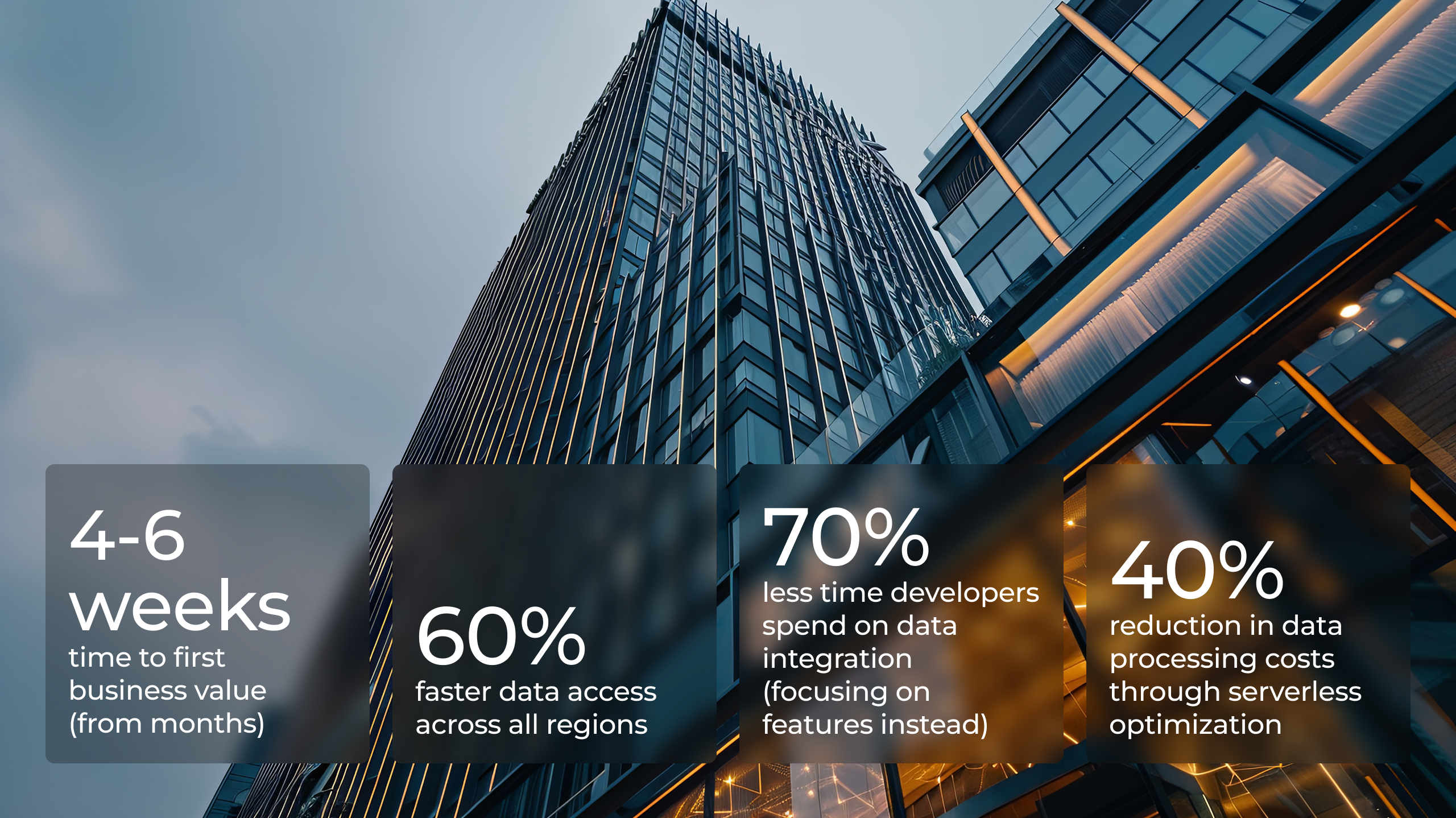
This architectural decision changed the fundamental relationship between data storage and business utility. Teams across DBS could now invoke lightweight functions for data extraction, transformation, and filtering on demand. Data scientists no longer waited for centralized engineering to build custom pipelines. Product teams could test new services using production data within days, not months.
The platform was designed with extreme configurability. When Singapore needed to process transaction data differently than Hong Kong, the system adapted instantly. WhenThailand required different data handling due to regulatory changes, teams configured the response in hours. No manual rework, no infrastructure provisioning delays.
We deployed experienced consultants on-site with DBS, integrated directly into their product teams. This wasn't a vendor delivering specifications - it was collaborative development where both teams shared responsibility for outcomes.When architectural decisions needed to be made, we made them together. When production issues occurred, we debugged them jointly with DBS engineers.
Our goal extended beyond platform delivery - we aimed to build internal capability soDBS could evolve the infrastructure independently.
Breaking The Linear
We saw the data lake not as legacy to replace but as untapped computational power. The breakthrough: building directly on it with serverless functions instead of around it. This cascaded through the entire organization - data scientists became self-sufficient, regional teams innovated independently while maintaining compliance, and new services launched using production data immediately. We didn't migrate DBS to modern infrastructure; we made their existing infrastructure modern.
From data repository to innovation engine
Summary
We transformed DBS from managing a passive data repository into operating an active innovation engine. The serverless layer democratized data access, turning every developer into a potential data product creator.
DBS can now introduce new digital services across Southeast Asia faster than competitors and expand into new markets without infrastructure constraints. Features that were practically impossible due to data access limitations are now routinely deployed. Market experiments that required months of infrastructure work now launch in weeks.
Most importantly, we established a new trajectory for how DBS competes. They stopped asking "how do we modernize our data infrastructure?" and started asking "what new services can we launch now that data is instantly accessible?" The platform opened entirely new possibilities for innovation that weren't visible before.
.webp)