
Python developer with a strong engineering background and over 3 years of experience in software development. Specialises in building robust, scalable applications and is particularly interested in system optimisation and backend development. Passionate about triathlon and endurance sports, trying to push limits in personal bests.
Read articles
How to design the LLM Hub Platform for enterprises
In today's fast-paced digital landscape, businesses constantly seek ways to boost efficiency and cut costs. With the rising demand for seamless customer interactions and smoother internal processes, large corporations are turning to innovative solutions like chatbots. These AI-driven tools hold the potential to revolutionize operations, but their implementation isn't always straightforward.
The rapid advancements in AI technology make it challenging to predict future developments. For example, consider the differences in image generation technology that occurred over just two years:

Source: https://medium.com/@junehao/comparing-ai-generated-images-two-years-apart-2022-vs-2024-6c3c4670b905
Find more examples in this blog post .
This text explores the requirements for an LLM Hub platform, highlighting how it can address implementation challenges, including the rapid development of AI solutions, and unlock new opportunities for innovation and efficiency. Understanding the importance of a well-designed LLM Hub platform empowers businesses to make informed decisions about their chatbot initiatives and embark on a confident path toward digital transformation.
Key benefits of implementing chatbots
Several factors fuel the desire for easy and affordable chatbot solutions.
- Firstly, businesses recognize the potential of chatbots to improve customer service by providing 24/7 support, handling routine inquiries, and reducing wait times.
- Secondly, chatbots can automate repetitive tasks , freeing up human employees for more complex and creative work.
- Finally, chatbots can boost operational efficiency by streamlining processes across various departments, from customer service to HR.
However, deploying and managing chatbots across diverse departments and functions can be complex and challenging. Integrating chatbots with existing systems, ensuring they understand and respond accurately to a wide range of inquiries, and maintaining them with regular updates requires significant technical expertise and resources.
This is where LLM Hubs come into play.
What is an LLM Hub?
An LLM Hub is a centralized platform designed to simplify the deployment and management of multiple chatbots within an organization. It provides a single interface to oversee various AI-driven tools, ensuring they work seamlessly together. By centralizing these functions, an LLM Hub makes implementing updates, maintaining security standards, and managing data sources easier.
This centralization allows for consistent and efficient management, reducing the complexity and cost associated with deploying and maintaining chatbot solutions across different departments and functions.
Why does your organization need an LLM Hub?
The need for such solutions is clear. Without the adoption of AI tools, businesses risk falling behind quickly. Furthermore, if companies neglect to manage AI usage, employees might use AI tools independently, leading to potential data leaks. One example of this risk is described in an article detailing leaked conversations using ChatGPT, where sensitive information, including system login credentials, was exposed during a system troubleshooting session at a pharmacy drug portal.
Cost is another critical factor. The affordability of deploying chatbots at scale depends on licensing fees, infrastructure costs, and maintenance expenses. A comprehensive LLM Hub platform that is both cost-effective and scalable allows businesses to adopt chatbot technology with minimal financial risk.
Considerations for the LLM Hub implementation
However, achieving this requires careful planning. Let’s consider, for example, data security . To provide answers tailored to employees and potential customers, we need to integrate the models with extensive data sources. These data sources can be vast, and there is a significant risk of inadvertently revealing more information than intended. The weakest link in any company's security chain is often human error, and the same applies to chatbots. They can make mistakes, and end users may exploit these vulnerabilities through clever manipulation techniques.
We can implement robust tools to monitor and control the information being sent to users. This capability can be applied to every chatbot assistant within our ecosystem, ensuring that sensitive data is protected. The security tools we use - including encryption, authentication mechanisms, and role-based access control - can be easily implemented and tailored for each assistant in our LLM Hub or configured centrally for the entire Hub, depending on the specific needs and policies of the organization.
As mentioned, deploying, and managing chatbots across diverse departments and functions can also be complex and challenging. Efficient development is crucial for organizations seeking to stay compliant with regulatory requirements and internal policies while maximizing operational effectiveness. This requires utilizing standardized templates or blueprints within an LLM Hub, which not only accelerates development but also ensures consistency and compliance across all chatbots.
Additionally, LLM Hubs offer robust tools for compliance management and control, enabling organizations to monitor and enforce regulatory standards, access controls, and data protection measures seamlessly. These features play a pivotal role in reducing the complexity and cost associated with deploying and maintaining chatbot solutions while simultaneously safeguarding sensitive data and mitigating compliance risks.
In the following chapter, we will delve into the specific technical requirements necessary for the successful implementation of an LLM Hub platform, addressing the challenges and opportunities it presents.
LLM Hub - technical requirements
Several key technical requirements must be met to ensure that LLM Hub functions effectively within the organization's AI ecosystem. These requirements focus on data integration, adaptability, integration methods, and security measures . For this use case, 4 major requirements were set based on the business problem we want to solve.
- Independent Integration of Internal Data Sources: The LLM Hub should seamlessly integrate with the organization's existing data sources. This ensures that data from different departments or sources within the organization can be seamlessly incorporated into the LLM Hub. It enables the creation of chatbots that leverage valuable internal data, regardless of the specific chatbot's function. Data owners can deliver data sources, which promotes flexibility and scalability for diverse use cases.
- Easy Onboarding of New Use Cases: The LLM Hub should streamline the process of adding new chatbots and functionalities. Ideally, the system should allow the creation of reusable solutions and data tools. This means the ability to quickly create a chatbot and plug in data tools, such as internal data sources or web search functionalities into it. This reusability minimizes development time and resources required for each new chatbot, accelerating AI deployment.
- Security Verification Layer for the Entire Platform: Security is paramount in LLM-Hub development when dealing with sensitive data and infinite user interactions. The LLM Hub must be equipped with robust security measures to protect user privacy and prevent unauthorized access or malicious activities. Additionally, a question-answer verification layer must be implemented to ensure the accuracy and reliability of the information provided by the chatbots.
- Possibility of Various Integrations with the Assistant Itself: The LLM Hub should offer diverse integration options for AI assistants. Interaction between users and chatbots within the Hub should be available regardless of the communication platform. Whether users prefer to engage via an API, a messaging platform like Microsoft Teams, or a web-based interface, the LLM Hub should accommodate diverse integration options to meet user preferences and operational needs.
High-level design of the LLM Hub
A well-designed LLM Hub platform is key to unlocking the true potential of chatbots within an organization. However, building such a platform requires careful consideration of various technical requirements. In the previous section, we outlined four key requirements. Now, we will take an iterative approach to unveil the LLM Hub architecture.
Data sources integration
Figure 1
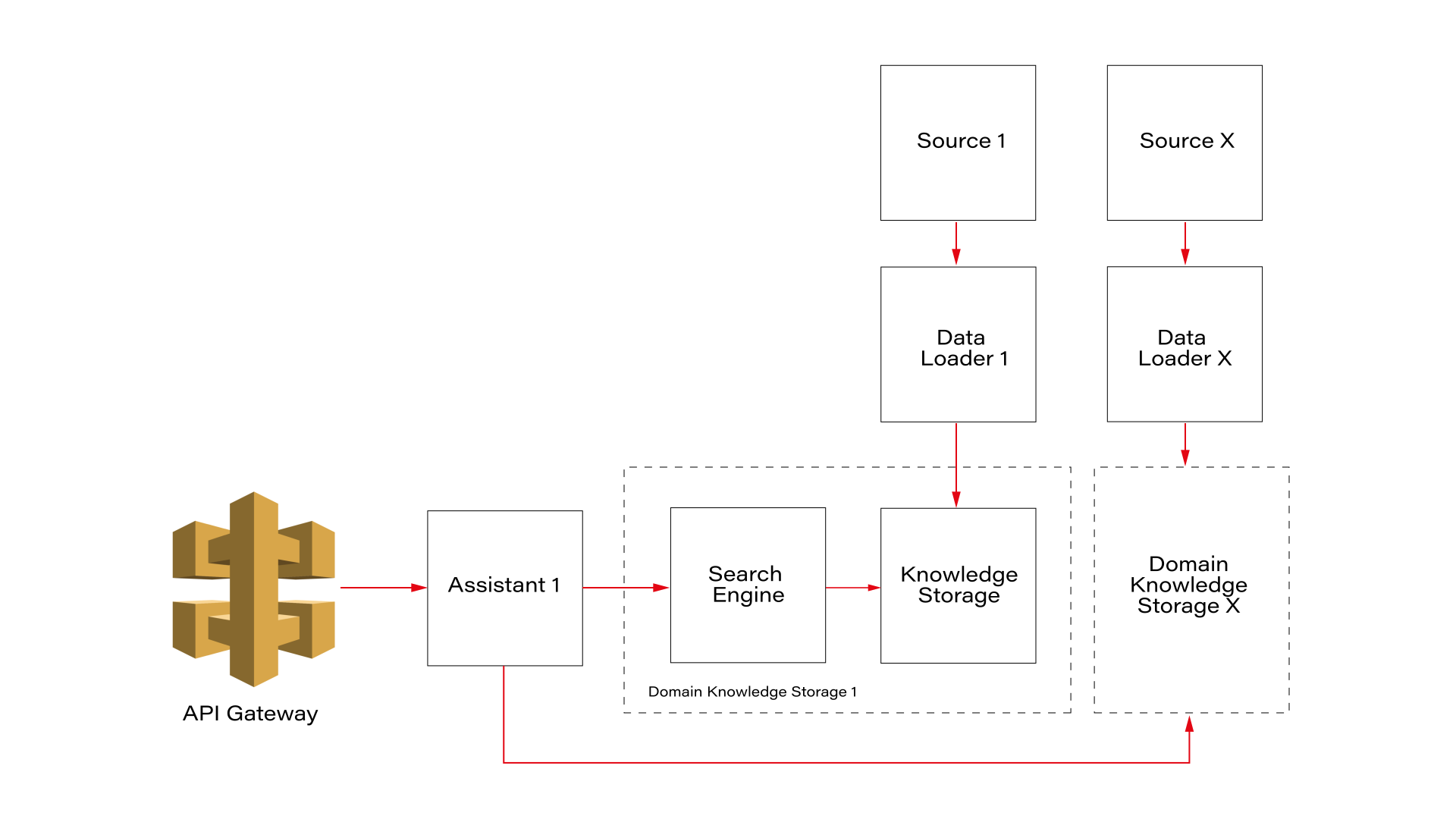
The architectural diagram in Figure 1 displays a design that prioritizes independent integration of internal data sources. Let us break down the key components and how they contribute to achieving the goal:
- Domain Knowledge Storage (DKS) – knowledge storage acts as a central repository for all the data extracted from the internal source. Here, the data is organized using a standardized schema for all domain knowledge storages. This schema defines the structure and meaning of the data (metadata), making it easier for chatbots to understand and query the information they need regardless of the original source.
- Data Loaders – data loaders act as bridges between the LLM Hub and specific data sources within the organization. Each loader can be configured and created independently using its native protocols (APIs, events, etc.), resulting in structured knowledge in DKS. This ensures that LLM Hub can integrate with a wide variety of data sources without requiring significant modifications in the assistant. Data Loaders, along with DKS, can be provided by data owners who are experts in the given domain.
- Assistant – represents a chatbot that can be built using the LLM Hub platform. It uses the RAG approach, getting knowledge from different DKSs to understand the topic and answer user questions. It is the only piece of architecture where use case owners can make some changes like prompt engineering, caching, etc.
Functions
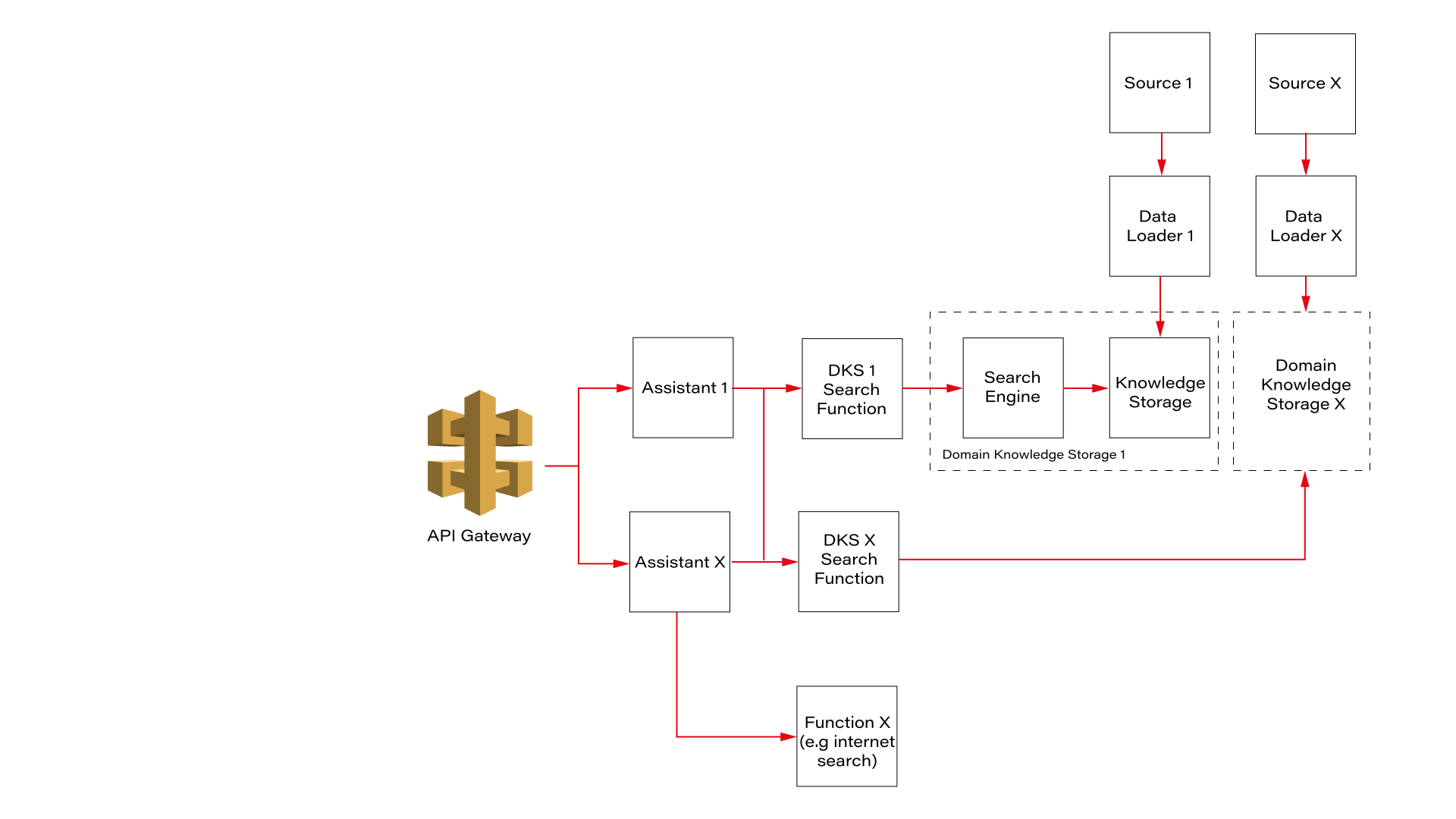
Figure 2 introduces pre-built functions that can be used for any assistant. It enables easier onboarding for new use cases . Functions can be treated as reusable building blocks for chatbot development . Assistants can easily enable and disable specific functions using configuration.
They can also facilitate knowledge sharing and collaboration within an organization. Users can share functions they have created, allowing others to leverage them and accelerate chatbot development efforts.
Using pre-built functions, developers can focus on each chatbot's unique logic and user interface rather than re-inventing the wheel for common functionalities like internet search. Also, using function calling, LLM can decide whether specific data knowledge storage should be called or not, optimizing the RAG process, reducing costs, and minimizing unnecessary calls to external resources.
Figure 2
Middleware
With the next diagram (Figure 3), we introduce an additional layer of middleware, a crucial enhancement that fortifies our software by incorporating a unified authentication process and a prompt validation layer. This middleware acts as a gatekeeper , ensuring that all requests meet our security and compliance standards before proceeding further into the system.
When a user sends a request, the middleware's authentication module verifies the user's credentials to ensure they have the necessary permissions to access the requested resources. This step is vital in maintaining the integrity and security of our system, protecting sensitive data, and preventing unauthorized access. By implementing a robust authentication mechanism, we safeguard our infrastructure from potential breaches and ensure that only legitimate users interact with our assistants.
Next, the prompt validation layer comes into play. This component is designed to scrutinize each incoming request to ensure it complies with company policies and guidelines. Given the sophisticated nature of modern AI models, there are numerous ways to craft queries that could potentially extract sensitive or unauthorized information. For instance, as highlighted in a recent study , there are methods to extract training data through well-constructed queries. By validating prompts before they reach the AI model, we mitigate these risks, ensuring that the data processed is both safe and appropriate.
Figure 3
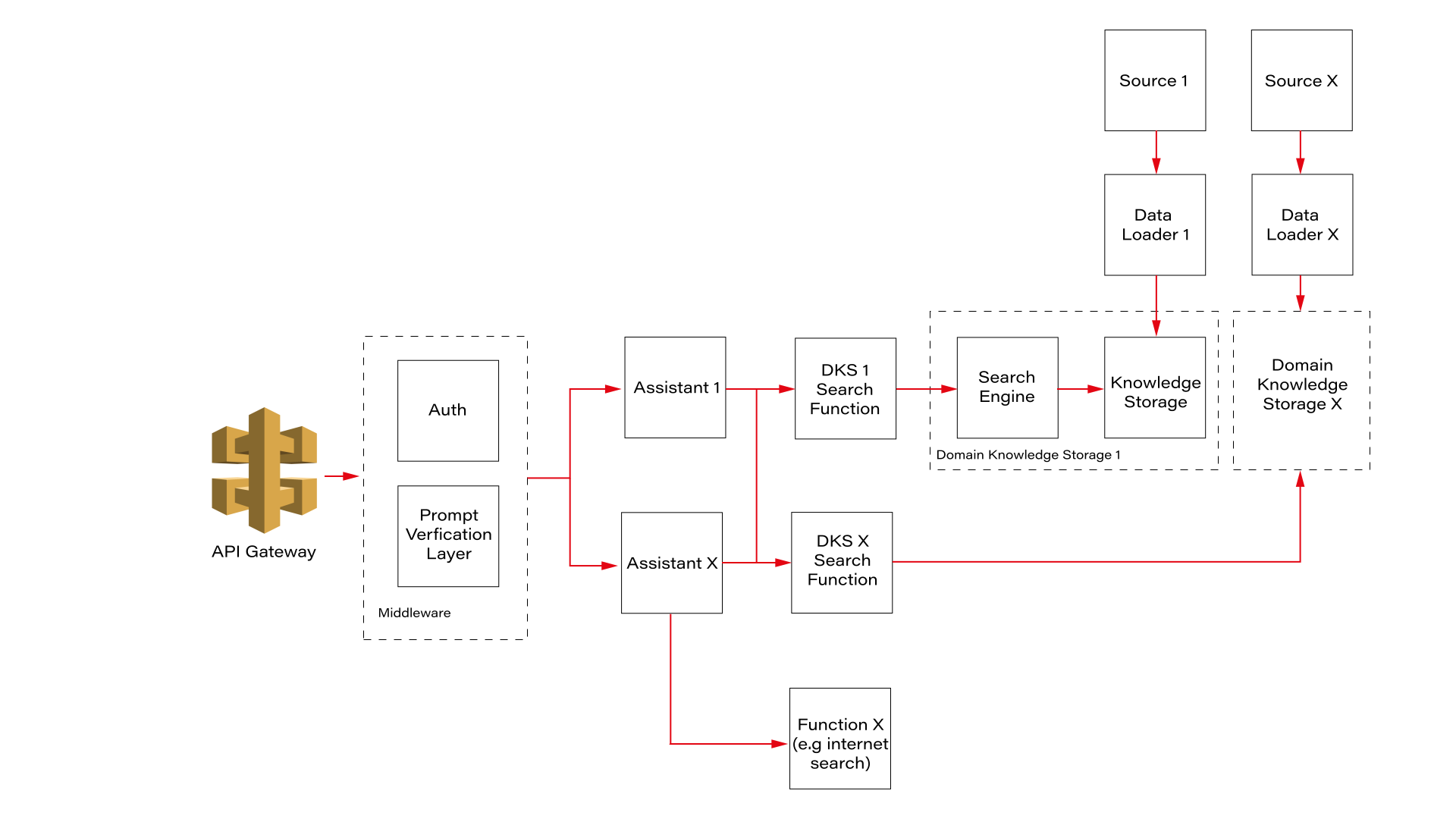
The middleware, comprising the authentication (Auth) and Prompt Verification Layer, acts as a gatekeeper to ensure secure and valid interactions. The authentication module verifies user credentials, while the Prompt Verification Layer ensures that incoming requests are appropriate and within the scope of the AI model's capabilities. This dual-layer security approach not only safeguards the system but also ensures that users receive relevant and accurate responses.
Adaptability is the key here. It is designed to be a common component for all our assistants, providing a standardized approach to security and compliance. This uniformity simplifies maintenance, as updates to the authentication or validation processes can be implemented across the board without needing to modify each assistant individually. Furthermore, this modular design allows for easy expansion and customization, enabling us to tailor the solution to meet the specific needs of different customers.
This means a more reliable and secure system that can adapt to their unique requirements. Whether you need to integrate new authentication protocols, enforce stricter compliance rules, or scale the system to accommodate more users, our middleware framework is flexible enough to handle these changes seamlessly.
Handlers
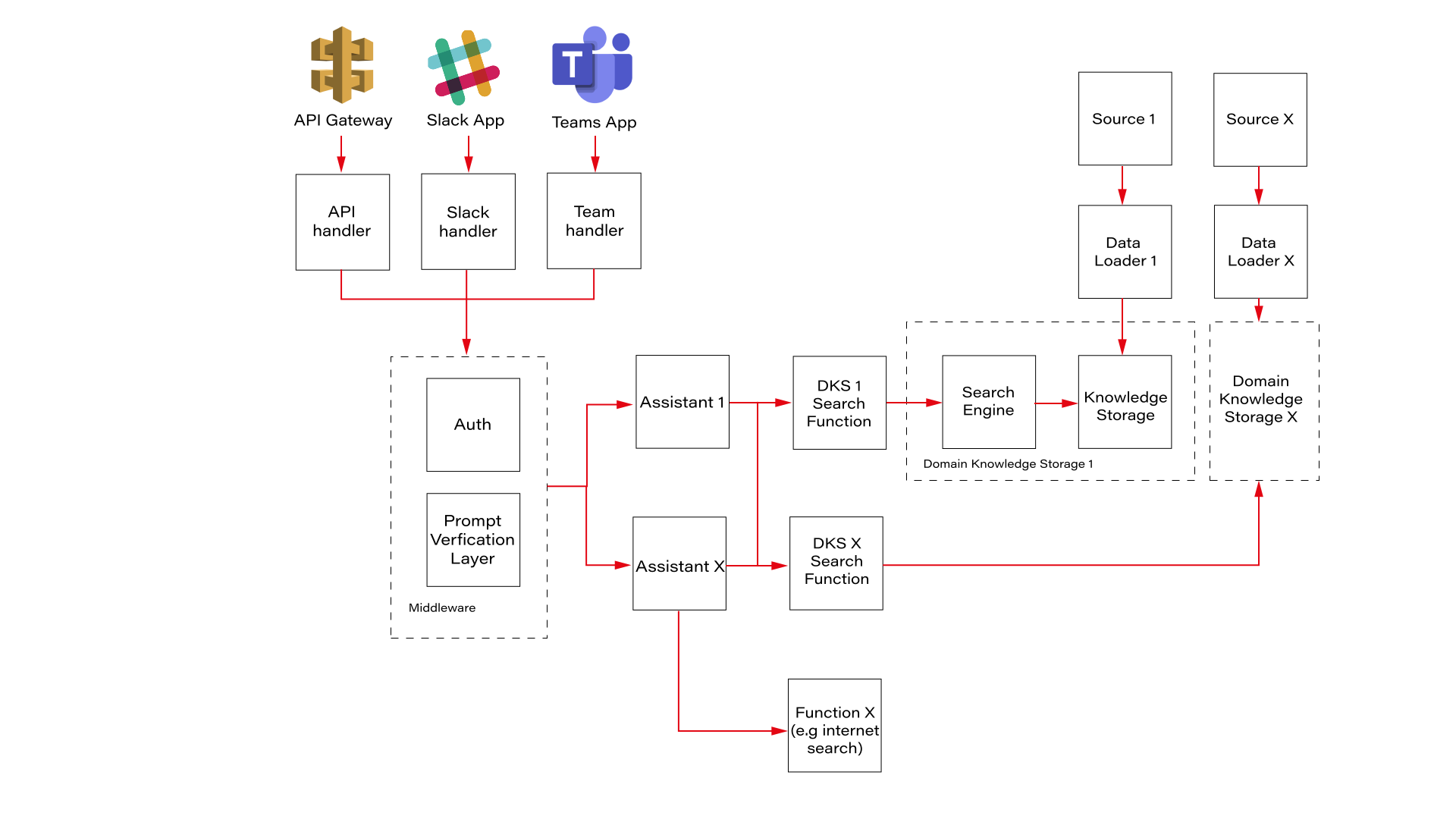
We are coming to the very beginning of our process: the handlers. Figure 4 highlights the crucial role of these components in managing requests from various sources . Users can interact through different communication platforms, including popular ones in office environments such as Teams and Slack. These platforms are familiar to employees, as they use them daily for communication with colleagues.
Handling prompts from multiple sources can be complex due to the variations in how each platform structures requests. This is where our handlers play a critical role.
They are designed to parse incoming requests and convert them into a standardized format , ensuring consistency in responses regardless of the communication platform used. By developing robust handlers, we ensure that the AI model provides uniform answers across all communicators, thereby enhancing reliability and user experience.
Moreover, these handlers streamline the integration process, allowing for easy scalability as new communication platforms are adopted. This flexibility is essential for adapting to the evolving technological landscape and maintaining a cohesive user experience across various channels.
The API handler facilitates the creation of custom, tailored front-end interfaces . This capability allows the company to deliver unique and personalized chat experiences that are adaptable to various scenarios.
For example, front-end developers can leverage the API handler to implement a mobile version of the chatbot or enable interactions with the AI model within a car. With comprehensive documentation, the API handler provides an effective solution for developing and integrating these features seamlessly.
In summary, the handlers are a foundational element of our AI infrastructure, ensuring seamless communication, robust security, and scalability. By standardizing requests and enabling versatile front-end integrations, they provide a consistent and high-quality user experience across various communication platforms.
Figure 4
Conclusions
The development of the LLM Hub platform is a significant step forward in adopting AI technology within large organizations. It effectively addresses the complexities and challenges of implementing chatbots in an easy, fast, and cost-effective way. But to maximize the potential of LLM Hub, architecture is not enough, and several key factors must be considered:
- Continuous Collaboration: Collaboration between data owners, use case owners, and the platform team is essential for the platform to stay at the forefront of AI innovation.
- Compliance and Control: In the corporate world, robust compliance measures must be implemented to ensure the chatbots adhere to industry and organizational standards. LLM Hub can be a perfect place for it. It can implement granular access controls, audit trails, logging, or policy enforcements.
- Templates for Efficiency: LLM Hub should provide customizable templates for all chatbot components that can be used in a new use case. Facilitating templates will help teams accelerate the creation and deployment of new assistants, improving efficiency and reducing time to market.
By adhering to these rules, organizations can unlock new ways for growth, efficiency, and innovation in the era of artificial intelligence. Investing in a well-designed LLM Hub platform equips corporations with the chatbot tools to:
- Simplify Compliance: LLM Hub ensures that chatbots created in the platform adhere to industry regulations and standards, safeguarding your company from legal implications and maintaining a positive brand name.
- Enhance Security : Security measures built into the platform foster trust among all customers and partners, safeguarding sensitive data and the organization's intellectual property.
- Accelerate chatbot development : Templates and tools provided by LLM Hub, or other use case owners enhance quickly development and launch of sophisticated chatbots.
- Asynchronous Collaboration and Work Reduction: An LLM Hub enables teams to work asynchronously on chatbot development, eliminating the need to duplicate efforts, e.g., to create a connection to the same data source or make the same action.
As AI technology continues to evolve, the potential applications of LLM Hubs will expand, opening new opportunities for innovation. Organizations can leverage this technology to not only enhance customer interactions but also to streamline internal processes, improve decision-making, and foster a culture of continuous improvement. By integrating advanced analytics and machine learning capabilities, the LLM Hub can provide deeper insights and predictive capabilities, driving proactive business strategies.
Furthermore, the modularity and scalability of the LLM Hub platform means that it can grow alongside the organization, adapting to changing needs without requiring extensive overhauls. Specifically, this growth potential translates to the ability to seamlessly integrate new tools and functionalities into the entire LLM Hub ecosystem. Additionally, new chatbots can be simply added to the platform and use already implemented tools as the organization expands. This future-proof design ensures that investments made today will continue to yield benefits in the long run.
The successful implementation of an LLM Hub can transform the organizational landscape, making AI an integral part of the business ecosystem. This transformation enhances operational efficiency and positions the organization as a leader in technological innovation, ready to meet future challenges and opportunities.